
So, there is the “pythagorean” way of constructing musical keys – using the 3rd harmonic on top of 3rd harmonic to give us all 12 notes of the musical scale.
Another way to do this is to recognise that harmonics are generated at all prime number multiples of a fundamental resonance: the 3rd,, 5th, 7th, 11th. These are all present in Nature. So let’s explore this way of building a scale.
So, let’s build a harmonic scale from the two fundamental frequencies we discovered for B-flat and F.
(If you get lost here, you can scroll down to the big chart where I summarize all the notes that I find in the small tables, below.)
The first table below investigates the harmonics based on the “still point” vibration of 7.2 Hz (B-flat) that I had discovered on my tone generator.

- Starting with a frequency of 230.4 Hz (several octaves above 7.2 Hz), we treat this frequency of 230.4 Hz as though it is the frequency of a vibrating string, and then divide that string successively by 3, 5, 7, 9 (see the “Multiplier” column) to calculate the harmonic frequencies that we would get by touching the string at these “nodal” points.
- The second column is the name of the musical interval generated at each of these points – e.g. with a Multiplier of 3, we generate the musical interval which is called (in a typically confusing manner) “the fifth” – because it is the 5th note when you play do-re-mi-fa-so.
- Because we started with a B-flat, the “fifth” is an F, the “third” is a D, and so-on
- The 4th column is the resulting frequency in Hz
- In the “5ths-based Frequency” column, I put what my calibrated tuner says is correct for that named note, calibrated as it is, for “Pythagorean Just” intonation. Those items in red, highlight mismatches between the harmonic frequencies we generate and the pythagorean 3rd-harmonic approach
- And, I’ve added a “Gematria” column. Gematria, is the concept that by adding the integers of a number, we unearth its common, symbolic significance and harmonic value. e.g., for the 7.2 Hz number we had found for B-flat: 7+2 = 9. What is interesting is that EVERY “Harmonic Frequency” we generated in this chart resolves to a 9. Another point of correlation of these “still-point” frequencies to bodies of knowledge passed down to us through the ages.
In the next table, we explore the harmonic series generated by the strongest harmonic of B-flat – its “fifth”, which is F. You will recall that F was also the other “still point” frequency we had found with the tone generator. We’ll borrow the 345.6 Hz for F which we generated in the table above as our starting point – but note that this F an octave of our original “magic” tone of 10.8 Hz (10.8 x 2 = 21.6 x 2 = 43.2 x 2 = 86.4 x 2 = 172.8 x 2 = 345.6 Hz = F:

As before, we multiply this frequency by 3, 5, 7 and 9 to generate its harmonic series. And this yields three new notes: the Major Third of F (A) – which is the major seventh of B-flat; the Dominant Seventh of F (D-sharp/E-flat) – which is the fourth of B-flat; and the Ninth of F (G) – which is the sixth of B-flat.
Put these together, and we now have all the notes necessary for several scales: B-flat Mixolydian, B-flat Ionian (major), F Dorian, F Mixolydian. We haven’t traversed the cycle of fifths 12 times, building up leimmas We’ve simply collected the notes of the harmonic series of the two “still point” tones that we detected (B-flat and F) and constructed scales where every harmonic is exactly – musically and mathematically – resonant with the fundamental, “magic” tones.
We now have all that we need to construct complex, modulating music – harmonically self-reinforcing and aligned with with the background, vibrational noise of NASA’s black-hole recordings, my experience with nodal still point vibrations on my tone-generator, ancient musical instruments, cymatics and – dare way say it? – gematria.
Originally, I had felt that we should stop with just the harmonic series for B-flat and F – and the eight notes this provides us. But I since have felt that if we keep going, until we have generated all 11 notes of the Western chromatic scale, that we are building a full palette, circling downwards towards our “sub-lunary sphere” and therefore encompassing some of the more discordant energies that make up our existence on this plane.
So, let’s do that – might as well get the whole palette.
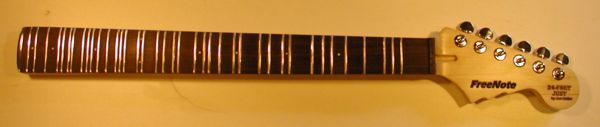
Note: It turns out that when you put the Seventh found above(D-sharp/E-flat) into a musical scale with a B-flat, it should be the “fourth” harmonic of B-flat, but it sounds bad. And to bear this out, if we generate the harmonics from this flavor of E-flat, none of the resulting harmonics resonate with our original B-flat and F frequencies – as shown in table 2b. This is a problem which Just Intonation luthiers like Jon Catler have taken into account, by including both versions of the 4th harmonic in their guitar necks.

Another way to calculate the fourth is as though there is a string three times longer than our original B-flat string which, if we touch it a third of the way along its length gives us a B-flat. So, instead of 3/2, it’s 2/3.
2/3 x 460.8 Hz (our B-flat) gives an E-flat/D-sharp of 307.2 Hz (compared to 302.4 Hz). This “fourth-based” E-flat actually sounds sweeter in a musical scale with B-flat. So, here are the harmonic frequencies generated from this E-flat. As you can see, this E-flat does create harmonics of B-flat and F which match our original frequencies.

OK, B-flat was our starting point in the first quadrant; its fifth (and strongest harmonic) – an F – was our starting point for our second quadrant; and the fifth of that F (a C) is the starting point for the third quadrant below (in yellow).

The only new note we get from the “C quadrant” is the musical 3rd – which is an E (which is a tri-tone to B-flat, the “devil’s interval”.
Also note that, in gray, the frequencies for B-flat and the D we generate from a C are slightly different from those generated as harmonics from B-flat in our first quadrant – as highlighted in red. That “fractal harmonic entropy” which manifests as the lemma is starting to make its presence known. My solution? I’m going to stick with the original frequencies for B-flat and D that we had in the first table. Remember, we don’t want to play in all keys – we want to play in the keys which resonate with our “musical DNA” frequencies for B-flat and F.
Let’s move on to explore the harmonics of our next strongest harmonic, the fifth of C which is a G. Although, as you can see below in gray, the frequencies we are starting to get no longer match the frequencies we found for these notes in the first three tables. Fractal entropy is making its presence known even more emphatically – and while these may be valid frequencies if you are capable of playing spacey, micro-tonal music, I’m not. I’m going to focus on the main harmonic alignment – because I like simple music.
As above, this new table yields just one note we haven’t generated before – the third harmonic, in this case, a B (also the diminished 9th of B-flat).

Note: Another way to generate a G would be as the third harmonic of the alternate E-flat harmonic we explored in table 2-b, above. In so doing, we get harmonic equivalence for the D and A frequencies we found earlier – but a contradiction for our frequencies for F and B. Again, some luthiers will support both flavors of the 6th harmonic (G in this case), such as Jon Catler’s FreeNote 24-fret Just Intonation guitar neck.

The next fifth is a D. D is also closer at hand to B-flat as the third harmonic of B-flat. This harmonic series yields one new harmonic note, again the major-third, F-sharp – which is an augmented 5th of B-flat:

And the strongest harmonic of that D is its 5th, an A which gives us the starting point for table 6 – which yields just one new note (once more the major-third), a C-sharp – which is the minor-3rd of B-flat:

Note: “A”, based on its name, might be thought of as the fundamental note of the musical scale but is actually the last table in our analysis – the most tenuous harmonic when B-flat is considered as the starting note. Perhaps by intention or irony, western labeling of the musical notes throws most students of music down the wrong path.
Anyway, we now have all 12 notes of the western chromatic scale – those closely aligned to B-flat and F, plus the “ugly” notes: E (from harmonic series of C), B (from the harmonic series of G), F-sharp (from D), and C-sharp (from A).
Summary of frequencies harmonically aligned with B-flat and F
Put all this together, and we have the exact frequencies in Hertz for an 11-note, chromatic musical scale that is harmonically aligned to our “still point” frequencies of 7.2 Hz for B-flat and 5.4 Hz for F:

Regarding the discordant notes (B, F-sharp, C-sharp). I would suggest that they should be used only “sparingly” and as grace-notes, because they are harmonically so distant, and discordant with our starting vibrations (B-flat, F). We shouldn’t use them as the fundamentals of scales themselves, because their harmonic series would all be adrift from the B-flat and F fundamental frequencies. But life isn’t always butterflies and rainbows, so, when you need a little “venom” in your music, there they are. However, I submit that what the world needs now is music without venom – and so, generally, I avoid playing them.
Universally Harmonic Keys
So, focused on the keys that are most harmonically aligned with B-flat and F, we can construct music on any of the following keys and modes:
- B-flat mixolydian:- is the same notes as:
- C minor
- Eb Major
- F Dorian (blues-like)
- G Phrygian
- G# Lydian
- F is the 5th of Bb and its harmonic series adds an A (as the major third of an F) to the proceedings, and F mixolydian is the same notes as:
- G Minor
- B-flat Major
- C Dorian
- D Phrygian
- Eb Lydian
So, there’s the ability to blend an merge modes from across the two fundamental mixolydian keys of Bb and F.
It’s interesting to note that in the world of entropy, the fundamental principle that sets it all in motion – B-flat – really only exists in one of these tables. It’s the elephant in the room which you don’t really see.
Bar bands versus “serious musicality”
Western musical theory is so abstract and artificial that you can’t blame most musicians for not knowing it. It’s based on the cycle of fifths, and then tries to account for the leimma by dividing it out amongst all 11 intervals of the chromatic scale. It makes no allowance for fundamental, natural resonance and uses the wrong reference note (A instead of the actual B-flat, a semitone below); and with the wrong reference frequency (440 Hz instead of 432 Hz). So, it’s no wonder that most musicians spend their time playing other people’s music, trying to capture the excitement they received from that piece of music originally – which probably originally escaped the clutches of harmonic death because the guitar was uniquely tuned, or there was a vibrato on the Hammond organ, or for whatever reason.
But, besides the general “inability to swing” amongst bar bands, there is another key limitation to their musicality, in my view: Guitar “Concert Tuning” (E, A, D, G, B, E) lends itself to the keys of E, A and B – and so most easy-to-play guitar music is comprised of E, A and B chords.
Most guitar players don’t question why a guitar is tuned this way, or how it came about. It is, and therefore that’s how they learn to play it, and these are the sounds that come out of it. But, as we’ve seen, B is discordant with our “magic” key of B-flat, and I prefer not to play it at all, E is a tri-tone to B-flat (the “devil’s interval”) – although jazz people love that stuff. So, if there really is a subliminal B-flat resonance in the background at all times, a good portion of the notes coming from a concert-tuned guitar are going to be dissonant with it.
Solution: slap a capo on your guitar on the first fret to put it into F – and every open string is now a “non-ugly” note from our collection.
Pianists have a more even playing ground. There is no “prejudice” to the instrument – if you’re not playing all white keys or all black keys – it’s pretty much the same level of difficulty no matter what key you’re in. So, pianists tend to choose keys more on their aesthetic effect, rather than their playability. This may explain why much piano music is not in E, A or B, but in B-flat, E-flat, G-minor, etc. – keys in sympathy with our magic keys.
In my view this is the fundamental difference between “bar bands” and “serious musicians”. Serious musicians have in their midst a keyboard player, who introduces more interesting and pleasant keys. Bar-bands are mostly driven by the guitar player. It sounds rough – better have a beer!
Chuck Berry! – I hear you cry. But the unsung hero of those hits was Johnny Johnson – the piano player and original band leader. And there is a prevalence of B-flat and E-flat in those songs.
Jimi Hendrix! – I hear you cry, but after the initial pyrotechnics with the guitar tuned to concert E, he tuned down to E-flat – for songs such as The Wind Cries Mary – and all of his deeper, more numinous hits. Hendrix transcended the guitar-driven genre – taking his music to realms of consciousness that have rarely been seen, before or since. But he had re-tuned his instrument in order to do that.
And, in his way, so did Eddie Van Halen (also in E-flat), and of course Jimmy Page – with DADGAD and other unconventional tunings.
In the Beatles, Paul McCartney tended to write songs in B-flat, F and C because, as a bass-player, he was less limited by the tuning of the instrument – one note at a time, from across the fret-board. He once taught a friend of mine the B-flat major chord, because as he said, “all the best songs are in B-flat.” Whereas John Lennon, as a guitarist, tended to write songs with E, A and B in them – and, somehow, we judge John’s songs as musically more limited than the songs written by Paul McCartney and George Harrison.
Another interesting thing about the Beatles is that they became interested in the frequency 444 Hz – and are said to have use this as their reference pitch for tuning instead of 440 Hz,. As you can see in this chart, where we generate 3rd and 5th harmonics across a spectrum of 7 columns, a B-flat of 444.4444 Hz does appear as a Natural Harmonic of the Earth, in the 6th column:

444 Hz is also the difference note created by 4 out of 15 of the possible Solfeggio “difference” combinations! (see my investigation of the Solfeggio “difference notes” here.) And props to John Lennon for going to the trouble of tuning his grand piano according to 444 Hz for Imagine.
By the way, I secretly had my baby-grand piano tuned to according to 432 Hz a few years ago. It was still equal temperament, but when my daughter, who is quite an accomplished player, played on it she enthused about how it was more than just more “in-tune”, somehow the dynamics were better: the loud was louder and the quiet, quieter. I didn’t let her know until later that it was tuned to 432 Hz.